Summary: Muscular Dystrophy News Forum is an excellent site for tips and advice for persons with muscular dystrophy. William Lowery MD
Comments closedAutosomal Dominant Muscular Dystrophy Registry
Autosomal Dominant Muscular Dystrophy Registry
Summary: Muscular Dystrophy News Forum is an excellent site for tips and advice for persons with muscular dystrophy. William Lowery MD
Comments closed
I’m not finding clinical trials or case series specifically testing GLP-1 RAs or tirzepatide in LGMD. Current LGMD drug headlines are about gene therapies or other experimental agents, not GLP-1s.Synapse+1
The recent safety scare you may have seen that mentions LGMD and a patient fatality is about an LGMD gene therapy program, not about GLP-1 drugs.Prime Therapeutics+1
So any statement about GLP-1s in LGMD is, by necessity, extrapolation, not direct data.
Across large semaglutide and tirzepatide studies:
Typically ~25–35% of the weight lost is lean mass, the rest is fat. This pattern holds for tirzepatide and high-dose semaglutide (STEP, SURMOUNT and related analyses).Wiley Online Library+1
Reviews of GLP-1 RAs and sarcopenia conclude that:
They do reduce lean mass, but
The proportion of muscle lost is similar to other weight-loss interventions (diet, bariatric surgery, intensive lifestyle).PMC+1
So: GLP-1s are not uniquely “muscle-destroying”, but they can unmask or worsen sarcopenia in already fragile patients.
The FSHD Society has already raised concerns about GLP-1 use in muscular dystrophies, describing a patient with substantial weight loss and subjectively worsened muscle function, and advising very cautious use plus strength-preserving strategies.FSHD Society
For LGMD, baseline proximal weakness, respiratory vulnerability and sometimes cardiomyopathy mean any extra loss of lean mass may have outsized functional consequences (falls, loss of transfers, reduced cough strength).
So, from a neuromuscular standpoint, it’s absolutely valid to treat GLP-1 / tirzepatide as high-risk for deconditioning if not carefully managed.
Your uploaded comparison chart and eye-risk article nicely summarize the class safety issues:
Very common: GI intolerance (nausea, vomiting, diarrhea), dehydration → possible AKI.
Warnings: gallbladder disease, pancreatitis (causality still debated), possible bowel obstruction / ileus, and medullary thyroid carcinoma/MEN2 contraindication.
Ocular: retinopathy warnings already on labels; new observational signals for nAMD and NAION with semaglutide, but events are very rare and data are observational.
None of these are specific to LGMD, but in a patient with limited mobility and possible swallowing issues, the consequences of severe vomiting, dehydration, or ileus can be more serious (falls, aspiration, hospitalizations, rapid deconditioning).
Based on current evidence:
“GLP-1s are contraindicated in LGMD.”
There is no regulatory or guideline contraindication specific to LGMD (ADA, AACE, neuromuscular guidelines do not list LGMD as a do-not-use condition).
“GLP-1s directly damage muscle in LGMD.”
Human data show proportional lean-mass reduction, not a dramatic, drug-specific myotoxicity.PMC+1
So if “GLP-1 Drugs in LGMD” was being used to imply absolute prohibition or direct muscle toxicity in this disease, that would overstate what we actually know.
“In LGMD, GLP-1 / tirzepatide should be considered high-caution because of:
predictable lean-mass loss with rapid weight reduction, and
the high functional cost of even modest extra strength loss in these patients.”
“Use is not automatically wrong, but should only occur with:
clear metabolic/cardiovascular indications,
slow titration and intentional muscle-preserving plan, and
close neuromuscular follow-up.”
That framing matches what we know about body-composition effects, sarcopenia risk, and general safety, even though we lack LGMD-specific outcome data.
If I were writing a more precise version of “GLP-1 Drugs in LGMD” for clinicians, it would look something like:
Assumptions: Adult with LGMD, obesity and/or type 2 diabetes, relatively stable respiratory function.
Clarify indication
Only consider GLP-1 / tirzepatide if there is a strong ADA/AACE-aligned indication (T2D needing additional A1c reduction, obesity with cardiometabolic risk, CKD or CV risk reduction).
Baseline assessments
Document functional status: MRC scores, timed sit-to-stand, stair or transfer ability.
Consider DEXA or BIA to track lean mass if feasible.
Obtain baseline eye exam as suggested in your eye-risk article.
Drug and dose selection
Prefer lower starting dose and slower titration than usual.
Avoid aggressive weight-loss targets; aim for modest, gradual loss (e.g., 5–7% over 6–12 months) unless benefits clearly outweigh risk.
Muscle-preserving strategy
Coordinate with neuromuscular and rehab teams:
Adequate protein intake (often ≥1.2 g/kg/day if kidneys allow).
Tailored resistance / functional training within LGMD limitations.
Reassess if the patient reports new falls, loss of transfers, or decline in FVC or cough strength.
Stop / reassess thresholds
New or rapid functional decline temporally associated with dose escalation.
Intolerable GI effects → hospitalization or marked deconditioning.
Significant or progressive ocular symptoms (NAION/nAMD concern).
What’s valid: treating GLP-1 / GIP-GLP-1 agents as potentially high-risk for functional decline in LGMD unless muscle-preservation is actively managed, and insisting on individualized risk–benefit assessment.
What’s not currently evidence-based: saying they are categorically contraindicated or uniquely toxic to LGMD muscle.
Summary: Insight Meditation Center in Redwood City, California has collected the most respected Buddhist teachers who offer their dharma talks online free of charge. Their guidance can offer relief from the daily suffering mental processes that plague most of us. This blog has no financial interest with this organization. Follow this link: Audio Dharma William Lowery MD
Comments closedSummary: Ability Jobs is a website for job placement for persons with disabilities. Our blog has no financial interests or experience with this organization but would like followup on others’ experience with this site or others. William Lowery MD
Comments closedSummary: The Best Schools is a consolidator of online educational opportunities for disabled. Our blog has no financial interests with this site.
Comments closedSummary: Joe’s House is a longstanding website that partners with major hotels across the US and provides discount lodging for cancer patients while getting therapy. Upon contacting the founder, she states that these discounts are available for all disease processes facing the same challenge. One just contacts one of the hotel partners and mentions Joe’s House during the reservation process to get your discount. William Lowery MD
Comments closedThe international (mainly US) repository for ongoing or completed clinical trials.
To use this effectively type “lgmd” (or your muscular dystrophy subtype) in the “condition or disease” box to see a list of studies in this general category.
William Lowery MD
Comments closed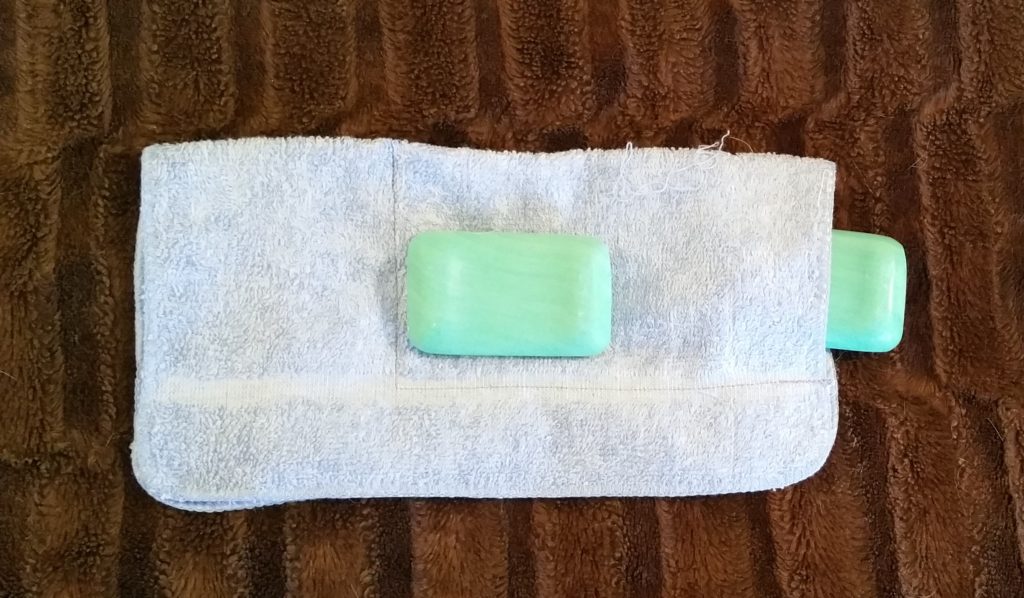
TashCloth has a special sewn pocket on a folded washcloth. Version 2.0 has a sewn button hole feature that allows hanging on a hook in the shower. It helps to have two and alternate to allow the soap and cloth to dry in between showers. The soap never falls out and you can put leftover fragments of soap or herbs for special scents. They are easy to sew or we sell these on request. William Lowery MD
Comments closed
Summary: This is the best reaching device/grabber I have found. It will hold on to at least 10 lbs depending on the geometry of the object and pick up coins or flat paper objects. Pick this up on Amazon Smile and list us as your charity to get a small donation at no expense to you.
William Lowery MD
Comments closed